The Honest Position
Morocco is not the easiest country in which to travel alone as a woman, and pretending otherwise helps nobody. The medinas of Fes and Marrakech are deliberately disorienting, commercial pressure in the souks is constant, and unsolicited attention is common enough to be worth planning around rather than hoping to avoid. None of that makes it a place to skip. It makes it a place to arrive at prepared, which is a different thing from arriving nervous.
Where to Start
The city you land in first shapes the whole trip. Essaouira is the gentlest introduction: a small walled medina you cannot get badly lost in, a coastal breeze, and noticeably less pressure from sellers. Chefchaouen is similarly manageable, particularly if you stay inside the old town. Marrakech rewards a stronger set of boundaries and is easier as a second stop than a first, especially around Jemaa el-Fnaa and the main souk entrances where the pressure concentrates.
What Actually Helps
Dressing modestly is worth doing as a matter of ease rather than fear: loose trousers and covered shoulders attract less comment and are more comfortable in the heat anyway. Staying in a riad rather than a hotel gives you a quiet, enclosed base to return to, and the staff at a good one will arrange taxis and confirm prices, which removes a whole category of daily friction. Booking a guide for the first morning in a large medina is not an admission of defeat; it is the fastest way to learn the geography you will then use alone.
Arrival and Transport
Book daytime arrivals wherever the schedule allows. Landing at midnight in an unfamiliar city converts a manageable situation into a stressful one before the trip has started. Between cities, first-class ONCF train seats cost slightly more and are worth it for the reserved seat and the predictability, particularly on the Casablanca, Rabat and Tangier corridor. Agree taxi fares before getting in, or use the metered option where one exists.
Handling Attention Without Escalating It
A firm la, shukran and continuing to walk works better than engaging. Debating rarely ends the exchange and often extends it. If somebody persists, stepping into a busy café or shop resets the situation without a confrontation, and staff are generally willing to help. Keeping interactions brief and polite is not rudeness here; it is the normal register for declining a sale.
What to Pack That Matters
- Lightweight long sleeves and loose trousers, for comfort as much as anything
- A cross-body bag that closes fully
- A scarf, useful for sun, dust and mosque visits
- A local SIM or eSIM, so maps and taxis work without hunting for wifi
- A doorstop or portable lock if staying in cheaper guesthouses
Budget Reality
Morocco can be inexpensive, but the costs that break a budget here are transport and convenience: private transfers, last-minute taxis, and guides booked under pressure rather than in advance. Carry small notes, since almost nobody has change, and build a daily buffer rather than a precise plan. A realistic travel budget with slack in it survives contact with a changed plan; a tight one does not.
When to Go
Timing changes this trip more than most. Spring and autumn are the comfortable windows, with warm days and manageable evenings in the interior. High summer in Marrakech and the interior is genuinely punishing, which compresses sightseeing into early mornings and pushes the cost of a place with a pool from a luxury to something closer to a necessity. Winter is mild on the coast and cold at altitude, and the High Atlas can close roads. Ramadan changes opening hours, transport schedules and the rhythm of the day considerably; travelling then is entirely possible and often memorable, but it is worth doing deliberately rather than discovering on arrival.
The Desert Trip
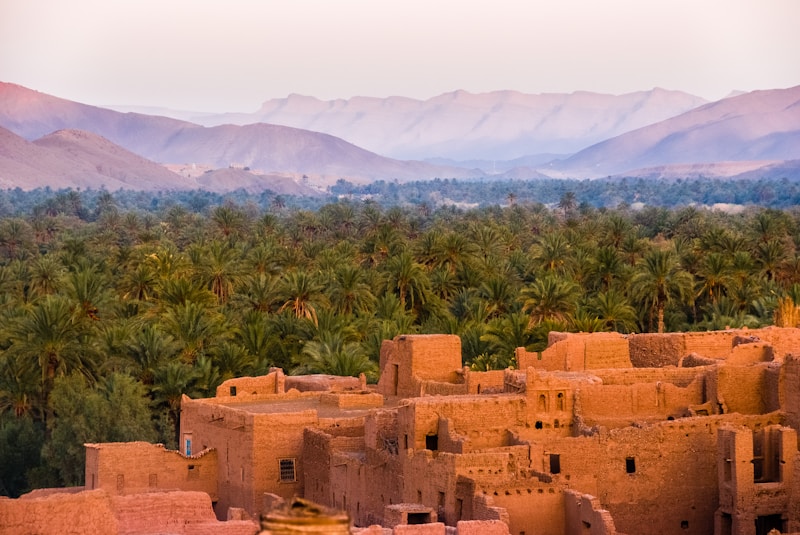
The Sahara excursion is the decision most itineraries turn on, and it is the one most worth thinking about in advance. It is a long way: two full days of driving from Marrakech for one night at the dunes, which is why the three-day version exists and why the two-day version is mostly a bus tour. Merzouga and Zagora are different distances and different experiences, and the cheaper trips economise on the drive rather than the camp.
This is also the part of a Morocco trip that changes most depending on whether you are alone. Shared vehicles are the norm and the group is assigned rather than chosen, which for a solo traveller means two days in a minibus with strangers and a camp where tents are usually allocated by pairs. Some people find that the best part of the trip; others would rather have arranged it with somebody they already know. Neither is wrong, but it is worth deciding before booking rather than at the pickup point.
Going Alone or With Someone
Both work here, and they produce genuinely different trips. Alone, you are more approachable and will be invited into more conversations, the itinerary answers to nobody, and the medinas are easier to navigate at your own pace. The costs are real too: accommodation is priced by the room, so the single supplement applies to riads as much as anywhere, and the persistent attention is more wearing over two weeks than over two days.
With someone, the pressure in the souks drops noticeably, the room cost halves, and late arrivals and long transfer days stop being a calculation. What you give up is the openness: two people are approached far less, by sellers and by everybody else. A common middle path is to travel alone and share the parts that benefit most, which usually means the desert trip, the long transfers and the first few nights in the largest cities.
If you are considering the second option, the screening matters more than the itinerary. Finding a travel buddy as a solo female traveller covers what to check before agreeing to anything, and what to agree before you book covers the money and sleeping arrangements that cause most of the friction. Whichever you choose, keep your own booking and your own return ticket.
Before You Go
Check current entry requirements and any regional advice for your own passport shortly before departure rather than at the planning stage, since both change: the official travel advice pages are the place to do it. Arrange travel insurance that covers the activities you actually intend to do, including any desert or mountain excursion, and note the emergency assistance number separately from your phone.
Final Word
Morocco is not a country where you switch off entirely, and it is also not a country to be afraid of. With daytime arrivals, a calm base to return to, clear boundaries and a realistic budget, travelling here alone is genuinely rewarding, and the hospitality is real. The preparation is what buys the ease, not the courage. Book the first two nights somewhere calm, arrive in daylight, and let the rest of the itinerary form once you have a feel for the place rather than deciding all of it from home.