
Two Cities, Two Food Cultures
This Vietnamese street food guide covers the two cities that argue about it the most: Hanoi and Ho Chi Minh City. Locals in each will tell you, unprompted, that the other city's pho is wrong. That argument is basically the whole trip. Over ten days moving north to south, you eat your way through two food cultures shaped by different colonizers, different climates, and a war that split the country's kitchens along with everything else. This guide is what to eat, where, and in what order, plus the logistics nobody puts in the caption.
Hanoi's food is built around broth simmered for hours and a restraint that took a few days to understand. Ho Chi Minh City, still called Saigon by most people who live there, cooks louder: more sugar, more herbs piled on the table, more dishes that came from somewhere else and got claimed. Neither is more authentic than the other. They're just answering different questions. The north spent centuries closer to China and under French rule longest; the south absorbed Khmer, Chinese, and later American ingredients into its pantry without much anxiety about it.
Hanoi: Start With Pho, But Don't Stop There
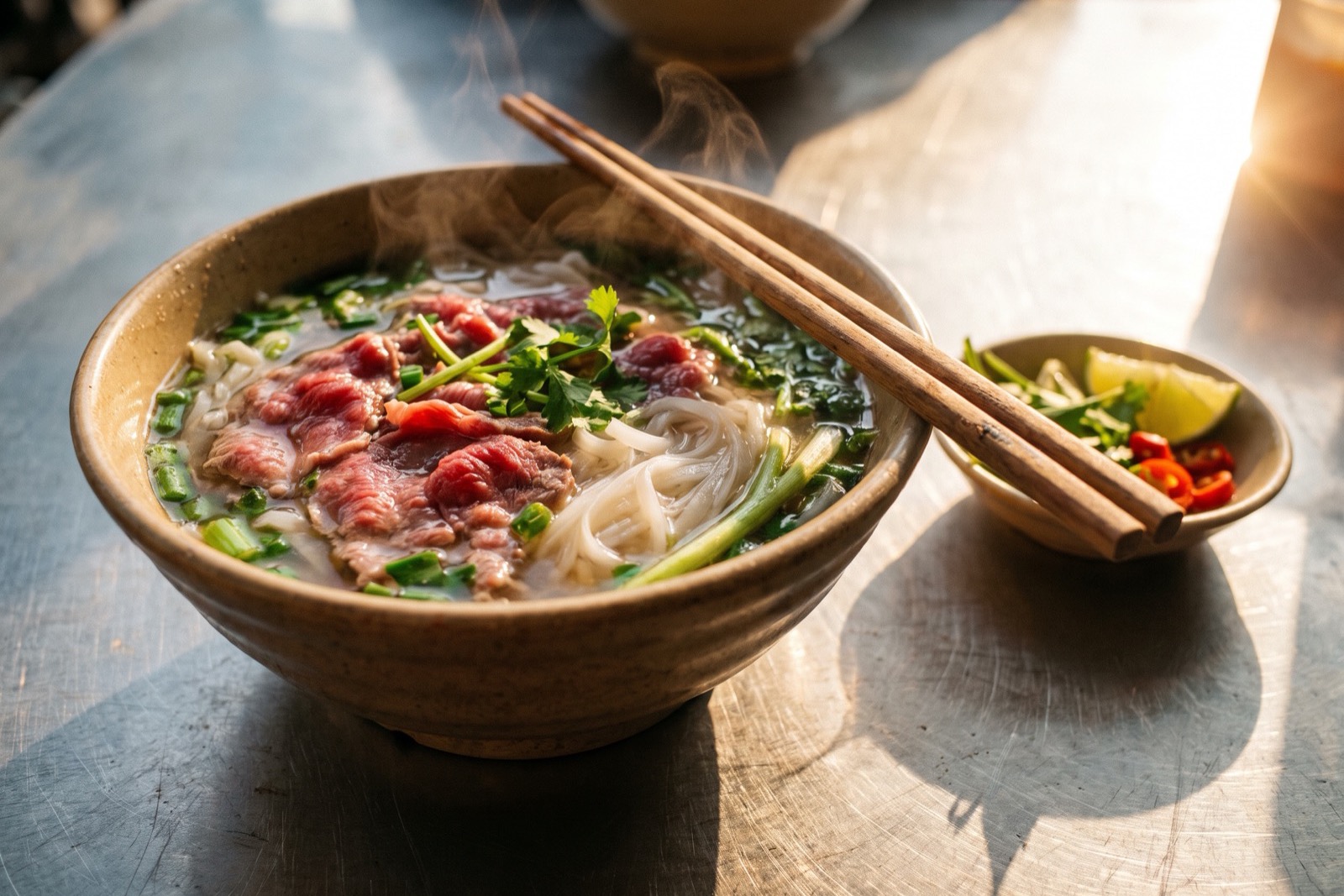
Start in Hanoi with pho, obviously, but go to Pho Gia Truyen on Bat Dan street before 9am or you'll be eating standing up against a wall. The broth is bone broth cooked overnight with charred ginger and onion, and the beef is sliced thin enough to cook in the bowl. There's no menu. You order small, medium, or large, with or without extra fatty brisket, and that's it. It's the kind of place that only has one thing to sell and has been selling it since 1955.
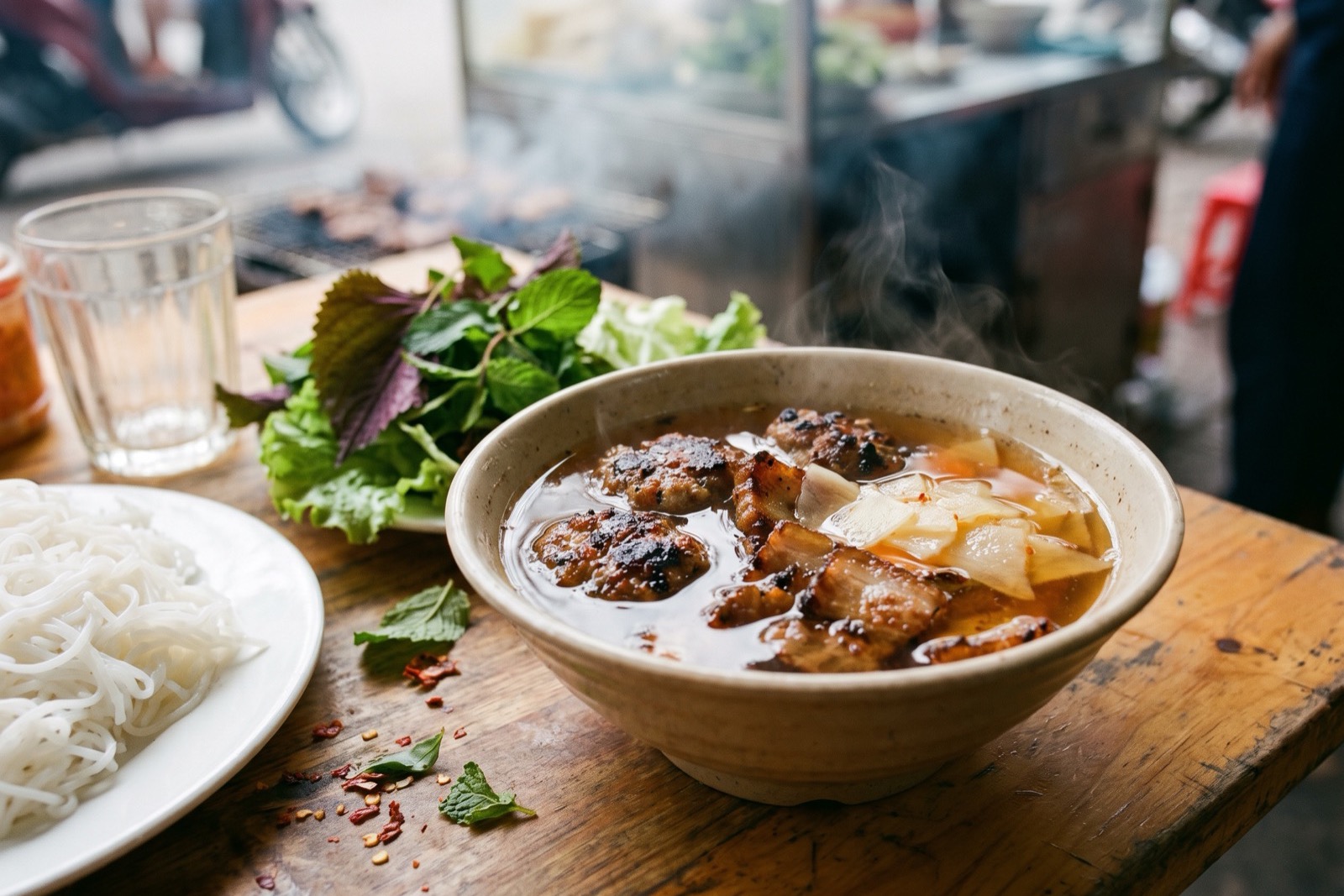
Bun cha is the other Hanoi dish everyone name-drops now, mostly because Anthony Bourdain ate it with Obama at a plastic table in 2016. Go to Bun Cha Huong Lien anyway; the tourist crowd hasn't ruined it. Grilled pork patties and pork belly slices sit in a bowl of sweet-sour fish sauce broth with pickled papaya, served with a side of rice noodles and a plate of raw herbs you build yourself. The smoke from the grills fills the whole street around lunchtime, and you'll smell the place before you see it.
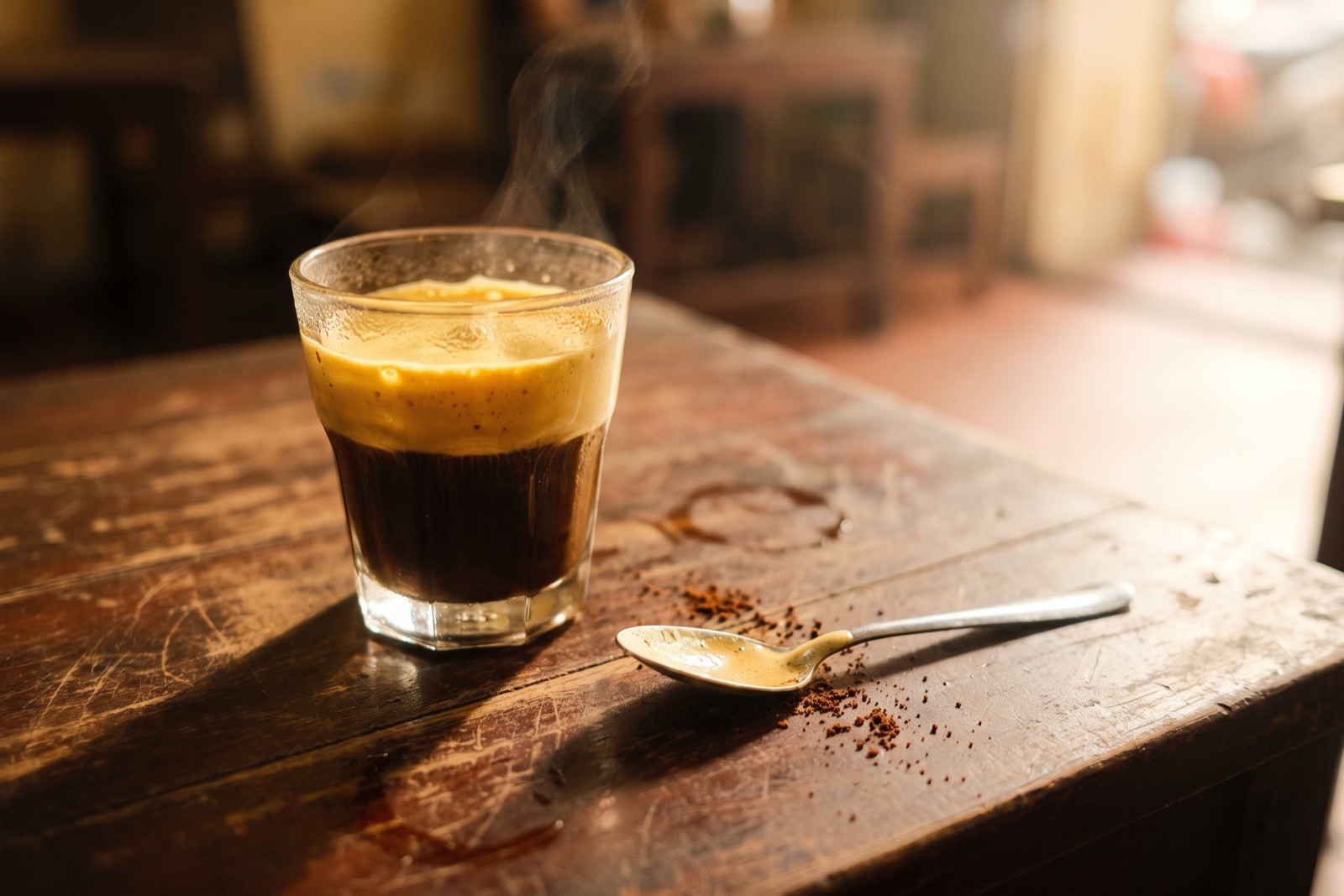
Egg coffee is the other holdover worth ordering, though it's more dessert than coffee. Egg yolk, sugar, and condensed milk get whipped into something between a custard and foam, then floated on top of strong robusta coffee. Cafe Giang claims to have invented it during a 1940s milk shortage, and whether or not that's exactly true, the version there is thick enough to eat with a spoon. Drink it slowly in the morning heat and watch the Old Quarter's motorbike traffic sort itself into something that only looks like chaos.
Bia hoi is worth building an evening around before you leave Hanoi. It's fresh, unfiltered draft beer brewed daily in small batches and sold for the equivalent of a few dozen cents a glass at plastic-stool corners around the Old Quarter, particularly the junction locals call Bia Hoi Corner near Ta Hien and Luong Ngoc Quyen streets. It doesn't keep, so what's on tap tonight is gone by tomorrow and replaced with a new batch, which is part of why it tastes different from one bar to the next. Order it with grilled squid or peanuts from the same vendor and stay for exactly as long as the stool stays comfortable, which for most people is about ninety minutes.
Getting South: Train or Plane
Getting south is its own decision. Flying takes two hours; the Reunification Express takes over thirty on the slow route, but a berth on the overnight sleeper from Hanoi to Hue or Da Nang breaks the trip into something more manageable, and you wake up to rice paddies instead of an airport lounge. If your schedule allows a stop, Hue and Hoi An both have their own street food worth a detour, but that's a different guide. For a straight food crawl, flying to Ho Chi Minh City saves the days for eating. Vietnam is usually one stretch of a longer Southeast Asia loop, and this middle section works well as the food-heavy pause between harder travel days on either side.
Ho Chi Minh City: Broth, Bread, and Plastic-Stool Economics
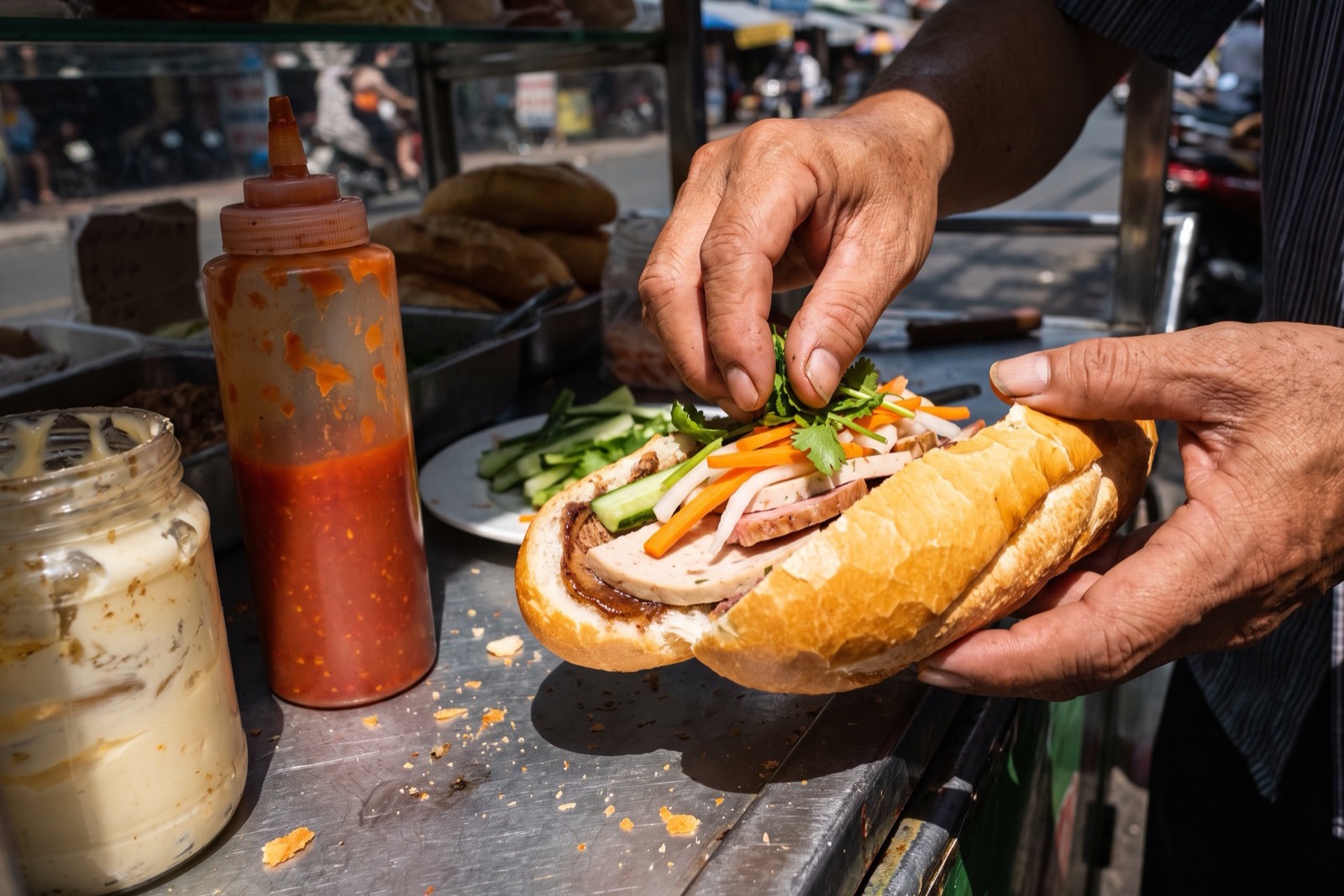
Saigon eats outside more than Hanoi does, and later. Banh mi is the obvious entry point, and Banh Mi Huynh Hoa in District 1 is worth the line that forms by early evening. The baguette itself is the giveaway of French colonial rule, but everything stuffed inside it is distinctly Vietnamese: pate, multiple cold cuts, pickled carrot and daikon, cucumber, cilantro, a swipe of chili and mayo. It's a sandwich built to be eaten walking, which is exactly how most people there eat it.
Com tam, broken rice with grilled pork chop, is the other dish that defines the city's food economy: cheap, fast, plastic stools, no menu needed because everyone orders the same three things. Com Tam Ba Ghien has been doing this since before the war ended and hasn't changed the recipe or the seating. The rice itself is the broken grains left over from milling whole rice, historically sold cheap to poorer households, and it's now treated as its own category of texture rather than a downgrade.
A Practical Four-Day Crawl
A four-day crawl through both cities works like this: day one is Hanoi's Old Quarter on foot, pho in the morning, bun cha at lunch, egg coffee in the afternoon lull. Day two adds a cooking class or a food-market walk through Dong Xuan to see the raw ingredients before they become the dishes you already ate. Day three is travel south, by air or overnight train. Day four in Ho Chi Minh City starts with banh mi from a street cart, moves to com tam for lunch, and ends at a night market in District 5's Cho Lon for dessert and grilled skewers. That's the shape of it; the specific stalls will change every few years as neighborhoods turn over.
Ordering Without Speaking Vietnamese
You don't need much Vietnamese to eat well, but a handful of words save time at stalls with no English and no patience for photos of the menu. “Khong cay” means not spicy, useful before you order something you assume is mild and isn't. “Them” means more, pointed at whatever's left in the bowl. Numbers get you a long way too, since most transactions are just a dish name and a finger count. Pointing at what the table next to you ordered works everywhere and offends no one; it's how a lot of regulars order anyway.
What It Actually Costs
None of this requires much of a travel budget. A bowl of pho runs 35,000 to 45,000 dong, a banh mi closer to 25,000, and a full day of eating in either city, breakfast through late-night skewers, rarely clears 300,000 dong, somewhere under 15 US dollars. The overnight train berth costs more than every meal that day combined, and the flight between Hanoi and Ho Chi Minh City, booked a few weeks out, is often cheaper than the taxi to either airport. Bring more cash than you think you'll need anyway; most stalls worth stopping at don't take cards, and the ones that do usually aren't worth stopping at.
Eating Safely Without Missing the Good Stuff
Street food safety in Vietnam comes down to volume and heat, not ambience. A stall doing brisk business is cooking and reheating constantly, which means less time for bacteria to build; a quiet stall with food sitting out is the actual risk, however clean the plastic stools look. Eat where the broth is visibly boiling and the grill is visibly smoking. Official travel health guidance is more conservative about street food in general, but the core advice lines up with what works here anyway: eat things hot and freshly cooked, skip anything that's been sitting out. Bottled water only, ice from places that look busy enough to go through it fast, and give your stomach a day or two to adjust to the amount of raw herb garnish before ordering the biggest bowl on the menu.
Two cities, one country, and a food argument that isn't going to resolve on this trip or any other. Eat the broth in Hanoi before it gets a tourist markup, eat the banh mi in Saigon standing up on the sidewalk where it belongs, and don't let anyone in either city convince you the other one's version doesn't count. If you're looking for people to argue about pho with in person, VoyageVixen's community boards are a decent place to find other travelers routing through Vietnam the same month you are.